
Add Row
Add Element
cropper
update
AutoInsiders
update
Add Element
  • Home
  • Categories
    • insider tips
    • expert reviews
    • industry trends
    • automotive knowledge
    • car insights
    • vehicle advice
    • maintenance tips
    • buying guides
    • market analysis
    • performance reviews
October 31.2025
3 Minutes Read

Discover the Forgotten Honda Civic SiR: The Birthplace of Type R

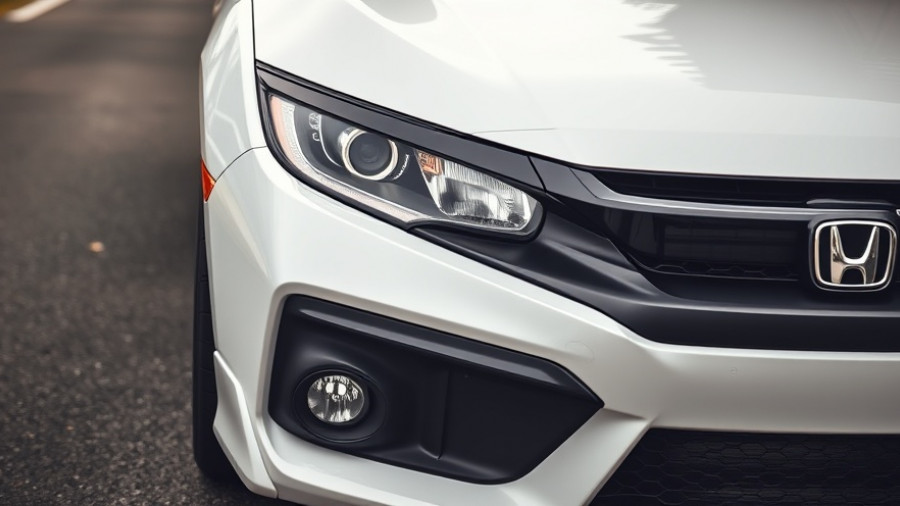
Close-up of Honda Civic SiR grille and headlights.

The Unsung Hero of Honda's Legacy: Meet the Civic SiR

When we think of high-performance cars that excite gearheads, the Honda Civic Type R instantly springs to mind. Its reputation for delivering thrilling driving experiences and racing pedigree is well-known, but before this iconic badge graced our roads, a lesser-known hero paved the way: the Honda Civic SiR of the late 1980s. Often overshadowed by its more celebrated successors, the Civic SiR represents the genesis of the Type R legacy and carries significance in automotive history.

Introducing the EF9 Honda Civic SiR

Launched in Japan in late 1989 as part of the fourth generation of Civic models, the EF9 Honda Civic SiR was Honda's first attempt to infuse racing technology into a mass-market vehicle. This wasn’t merely a marketing gimmick—this car was designed to make cutting-edge engineering accessible to everyday drivers. Sporting a lightweight frame and a sporty demeanor, the Civic SiR was truly a precursor to the Type R nameplate that would follow.

The VTEC Revolution: Performance Meets Efficiency

What truly set the Civic SiR apart was its pioneering engine technology. Equipped with Honda's first-ever VTEC engine—the B16A—the SiR featured a 1.6-liter inline-four that produced an impressive 158 horsepower at a thrilling redline of 8,100 RPM. This technology allowed a switch between camshaft profiles, optimizing the engine for different performance needs—a forerunner to how modern car technology features are designed to enhance user experience. With this engine, the Civic SiR balanced everyday usability with exhilarating performance, making it a favorite among enthusiasts.

A Nimble Lightweight: Chassis and Handling

Weighing just over 2,200 pounds and equipped with independent double wishbone suspension, the Civic SiR was a nimble hooligan. The agile chassis provided outstanding cornering capabilities enhanced by the optional limited-slip differential, offering a driving experience that many enthusiasts adore. Its light weight combined with spirited performance meant the SiR could outperform heavier competitors, earning it rightful recognition among sport compact aficionados.

Understated Aesthetics: The Look of a Champion

Visually, the Civic SiR was modest—a three-door hatchback with subtle styling changes from the standard Civic. While it may not have overflowed with flashy cues, the SiR displayed confidence through its iconic badging, raised hood center, and refined turn signals. This understated appearance allowed it to blend in with everyday traffic, a "wolf in sheep's clothing," if you will, a true hidden gem in the performance scene.

Connecting Performance to Legacy: Civic SiR to Type R

The Civic SiR’s prowess was instrumental in Honda’s decision to create the first Civic Type R in 1997—a model that continued the legacy of performance in a fresh new format. By incorporating lessons learned from the SiR into this upcoming generation of vehicles, Honda not only retained its performance ethos but expanded its reach globally. The Type R badge would go on to signify a brand dedicated to unparalleled driving dynamics across multiple platforms, including the Civic, NSX, and Integra.

The Type R Legacy: Continuing the Flow of Innovation

Looking ahead, the current Civic Type R embodies the spirit of its ancestor, the Civic SiR. Unveiled in 2025, this latest iteration continues to push the boundaries of automotive performance. With its turbocharged engine, advanced technology like all-wheel drive, and user-friendly torque delivery, it is a thoroughbred in every sense—from a sport compact perspective that remains true to what enthusiasts have come to love.

Why Knowing This Matters: A Call for Enthusiasts

In a world dominated by electric vehicles and hybrid technology, understanding the historical context of iconic models like the Civic SiR can enrich the appreciation of modern performance vehicles. For those who love car performance analysis and the heritage of automotive engineering, it’s essential to recognize how far we've come—and where we might go next. The Civic SiR paved the way for innovation, making it not only a model of performance but also a symbol of Honda's rich automotive legacy.

As car enthusiasts, let's celebrate the legends that lead to contemporary marvels. Share your thoughts on the Civic SiR and its impact on the Type R lineage. What does this legendary vehicle mean to you? Join the discussion and keep the spirit of performance alive!

automotive knowledge

2 Views

0 Comments

Write A Comment

*
*
Please complete the captcha to submit your comment.
Related Posts All Posts
04.10.2026

The 2025 Dodge Charger: Revolutionizing Muscle Cars with Electric Power

Update A New Era for Muscle Cars: The 2025 Dodge ChargerFor decades, muscle cars were defined by big engines, rear-wheel drive dynamics, and the roar of powerful V8s. But as society increasingly emphasizes sustainability and regulations tighten, the automotive industry is evolving. The 2025 Dodge Charger is a prime example of this shift, setting a new benchmark for what a muscle car can be in the age of electric vehicles. Instead of letting emissions regulations end the muscle car's legacy, Dodge faced the challenge head-on, creatively reimagining its iconic vehicle.Rewriting the Formula: Electrifying PerformanceThe introduction of the 2025 Dodge Charger Daytona marks a pivotal moment. Starting at $57,995, the electric version boasts an impressive 456 HP and a torque of 404 lb.-ft., proving that power can coexist with sustainability. Dodge has traded a traditional engine for dual motors, allowing the Charger to achieve 670 horsepower in its Scat Pack mode, a key factor that keeps it in the conversation with the outgoing Hellcat models.This electrification does not dilute performance; on the contrary, it enhances the overall driving thrill with features such as "PowerShot" boosts and dedicated driving modes designed for skids and drifts. For enthusiasts, this represents more than just an EV; it’s an evolution of an identity centered on daring and breathtaking performance.Embracing Heritage, Not Abandoning ItInterestingly, Dodge didn’t promote the electric Charger as a farewell to gasoline; rather, it expanded its lineup. By introducing turbocharged inline-six “Sixpack” models alongside the electric variant, Dodge embodies its commitment to both past and future. This strategic decision redefines muscle cars as a 'philosophy,' advocating for audacious performance regardless of the fuel source.The Shift in Consumer ExpectationsConsumer preferences are shifting dramatically. Today's drivers seek performance, reliability, and environmentally friendly options. The Charger Daytona offers impressive fuel economy ratings of 104 MPGe city and 91 MPGe highway, illustrating that muscle cars can forge ahead without compromising efficiency. In this changing landscape, Dodge has adeptly positioned itself at the forefront, blending nostalgia with modern automotive technology.Implications for the Muscle Car MarketThis move bodes well for the future of the muscle car market. Other automakers will likely have to follow suit, adapting their models to meet new environmental and consumer standards. As the debate continues between traditional muscle and electrification, Dodge's approach exemplifies a successful marrying of the two. The 2025 Charger suggests that muscle cars can not only survive in the era of electric vehicles but thrive.Conclusion: An Exciting Future AheadThe 2025 Dodge Charger Daytona represents a transformative chapter in the muscle car narrative. It challenges conventional wisdom, proving that muscle cars are far from obsolete; they are redefined for modernity. As automotive enthusiasts contemplate this evolution, one thing is evident: the future of performance driving is electric, and the legacy of muscle cars is alive and well. Keep an eye on this fascinating intersection of power and sustainability as the industry continues to adapt.

04.10.2026

Volkswagen's ID.4 Production Ends: What This Means for EV Buyers

Update Volkswagen's ID.4 Production Pause: A Strategic Shift Amid Changing Market Dynamics Volkswagen's recent decision to halt production of its electric vehicle (EV), the ID.4, at its Chattanooga facility is a pivotal moment for the brand in the U.S. automotive market. The company argues that this pause is not an end, but rather a strategic reset. As consumer demand increasingly shifts towards larger, gasoline-powered vehicles, Volkswagen is reprioritizing its resources to focus on the Atlas SUV. This shift echoes broader trends in consumer preference, reflecting a significant moment in the evolving landscape of the automotive industry. The Paradox of Electric Vehicle Demand Despite ambitious projections and investment in its electric vehicle lineup, Volkswagen’s ID.4 has not realized the success the company had anticipated within the U.S. market. While European sales of EVs soar, the American market is experiencing a resurgence in demand for traditional gas-powered SUVs. This has prompted VW to redirect its manufacturing focus towards the Atlas, a model that has solidified itself as one of the company's most dependable sellers. The Atlas, known for its spaciousness and family-friendly features, has become a staple in VW’s offerings, eclipsing the less popular ID.4. Challenges Facing Electric Vehicles The backdrop of this decision is layered with complexities surrounding the electric vehicle market in the U.S. In recent years, federal policy changes, notably the elimination of tax incentives for electric vehicles, have directly influenced consumer excitement and purchasing power. As sales of electric vehicles dropped sharply post-incentive, many manufacturers are reconsidering their EV strategies. The growing affordability crisis, exacerbated by inflation and fluctuating gas prices, further complicates the scenario, as consumers become increasingly price-sensitive. Thus, shifting back to established, profitable vehicles like the Atlas may seem more pragmatic. The Future of ID.4: An Intermission, Not a Farewell Volkswagen’s decision to pause ID.4 production does not spell doom for the model. In fact, VW executives are planning a revamped version of the ID.4 for North America in the future. This suggests a belief in the viability of electric vehicles in the long term, especially as the industry evolves towards more efficient, practical models that resonate better with consumer expectations. The upcoming generation of the ID.4 aims to address shortcomings such as performance and interior refinement, seeking to capture a market that is no longer awed merely by electric powertrains. Market Reflections: SUVs vs. EVs The decision taken by Volkswagen reflects a broader narrative in the automotive industry, where traditional internal combustion engine vehicles continue to perform strongly against their electric counterparts. With gas prices currently volatile, the demand for SUVs represents a layer of consumer preference that many manufacturers are keen to satisfy. As seen with Volkswagen, automakers may prioritize production of models with guaranteed sales, even as they remain committed to future electric offerings. In the interim, family-oriented vehicles like the Atlas that achieve better gas mileage contribute to market stability amidst uncertainty. Global Implications of Local Choices This pause on ID.4 production raises questions about the global automotive landscape. As consumer preferences vary significantly across regions, manufacturers must navigate complex dynamics that balance local demands with global sustainability goals. The shift back to gas-guzzling SUVs comes at a time when climate change concerns are reaching critical levels, posing a challenge to the automotive industry to innovate responsibly. While gas-powered vehicles remain popular, this decision brings to the forefront the need for a concerted effort towards climate-friendly solutions. Conclusion: An Evolving Industry Landscape As Volkswagen continues to maneuver through the complexities of the modern automotive market, the transition away from the ID.4 signifies more than just a production change; it highlights the evolving consumer landscape and the challenges of maintaining profitability in a shifting market. For consumers keen on the ID.4, current inventory remains available while Volkswagen prepares for a future iteration that may address previous model shortcomings. Ultimately, as vehicle preferences continue to change, the demand for effective, practical solutions will remain at the forefront of industry considerations.

04.10.2026

How GM’s Innovative Technology and Awareness Campaigns Tackle Distracted Driving

Update Understanding the Distracted Driving Crisis Distracted driving has become a serious threat on U.S. roads, and understanding its depth is crucial for all drivers. In 2024 alone, 3,208 fatalities resulted from distraction-related crashes, highlighting the need for heightened awareness around this issue. Apart from phone use, distractions can stem from simple tasks, such as adjusting the radio, leading to tragic consequences. GM's Commitment to Safety Through Technology General Motors (GM) has taken substantial steps to integrate technology aimed at mitigating distracted driving. The automaker's 2026 vehicle lineup showcases innovations like Driver Attention Assist, which employs in-cabin monitoring to detect signs of driver distraction or drowsiness. This system doesn’t just alert drivers; it can autonomously decelerate the vehicle and even contact emergency services if necessary. The Role of Voice Technology in Driving Safety To support drivers in keeping their focus on the road, GM has enhanced its voice command capabilities, reducing the need for physical interaction with devices while driving. By making hands-free functions a staple in their vehicles, GM caters to a growing demand for safer driving experiences without compromising on technological advances. Building a Culture of Awareness Beyond Technology While GM’s technology is vital, the company emphasizes the importance of responsible driving behavior. During Distracted Driving Awareness Month, GM encourages drivers to follow straightforward safety protocols: prior organization of navigation routes, music selection, and other essential tasks before hitting the road. These basic habits contribute significantly to reducing on-road distractions. Collaborative Efforts to Combat Distracted Driving GM's dedication extends beyond its vehicles. The company has invested over $40 million in road safety initiatives over the past two years, highlighting the collaborative effort to raise awareness around distracted driving. Collaborating with organizations like the Governors Highway Safety Association and others, GM is not just focusing on product development but working to foster a cultural shift in how distracted driving is perceived. The Statistics Behind Distracted Driving Distracted driving continues to be a significant safety hazard. In 2023, it was reported that distracted driving caused around 3,275 deaths and 324,819 injuries. This means that every day, distracted driving results in an average of nine deaths and 890 injuries, underscoring the urgency of preventive efforts. Community Engagement and Educational Initiatives To change social norms around distracted driving, GM has engaged with youth organizations to develop educational programs that empower young drivers. Initiatives led by student journalists, in partnership with the Youthcast Media Group, focus on storytelling to illustrate the risks associated with distracted driving. By reaching younger demographics, GM aims to instill safer driving habits from an early age. Conclusion: A Call for Personal Accountability As automakers like GM innovate to enhance road safety, it's essential for drivers to commit to responsible driving practices. Personal accountability and adherence to safety guidelines can significantly reduce the risks associated with distracted driving. By combining technology, education, and community involvement, we can work together to minimize distractions on the road.

Terms of Service

Privacy Policy

Core Modal Title

Sorry, no results found

You Might Find These Articles Interesting

T
Please Check Your Email
We Will Be Following Up Shortly
*
*
*