
cropper
update
AutoInsiders
update
  • Home
  • Categories
    • insider tips
    • expert reviews
    • industry trends
    • automotive knowledge
    • car insights
    • vehicle advice
    • maintenance tips
    • buying guides
    • market analysis
    • performance reviews
May 24.2025
3 Minutes Read

How the Baja Blaster Rebuilt After Challenges: A Performance Journey

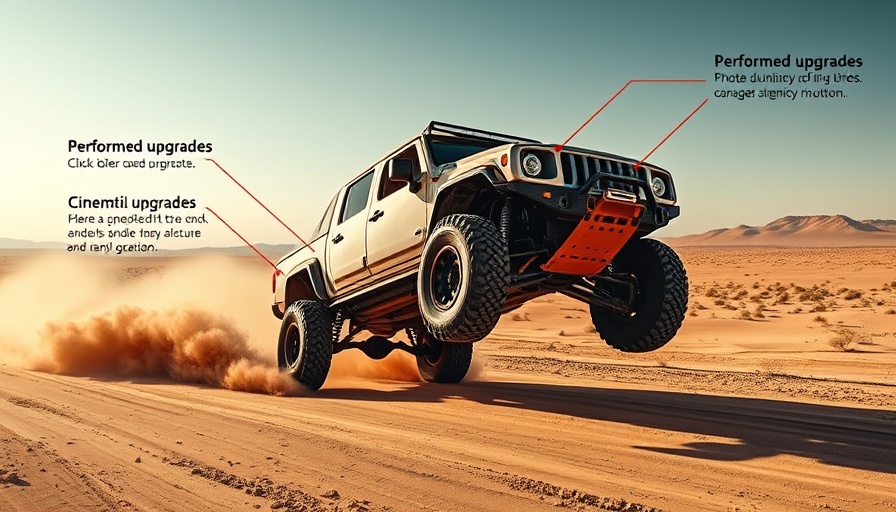
Baja Blaster performance issues: modified truck mid-jump in desert.

The Journey of Building the Baja Blaster

In the world of off-road racing, building the ultimate machine is no small feat. For the creators of the Baja Blaster, a renowned Ford Ranger converted into a racing beast, the journey has been nothing short of perils and discoveries. They dedicated over $100,000 and countless hours to constructing this off-road vehicle meant to soar through the desert. However, the excitement quickly turned into frustration when the truck struggled to make its first jump.

In 'Finally JUMPING Our $500 Ranger,' the team embarks on a journey filled with challenges in building their Baja Blaster, prompting a deeper analysis of the lessons learned along the way.

Identifying the Challenges

Following the truck's underwhelming performance, the team faced various mechanical issues. From shock reservoirs held up with zip ties to mysterious alternator failures, it became evident that the Baja Blaster required extensive repairs before it could fly as intended. Each flaw added stress, but determination fueled the crew's commitment to restoring the vehicle to its former glory.

The Importance of Maintenance and Inspection

Before tackling upgrades, the team cleaned out the truck's interior, stripped it down, and discovered alarming rust under the roll cage. To ensure not just aesthetic improvements but also safety measures, they prepped the surface and applied protective coating. This key step was crucial to prevent rust from jeopardizing the integrity of the vehicle.

Upgrading Critical Parts

As they upgraded worn parts like radius arms—vital in ensuring strength and stability—their choice to switch to double tube designs indicated a commitment to quality engineering. The original single-bar radius arms were prone to breakage due to stress, and the new double-bar system would evenly distribute forces, enhancing durability immensely.

Addressing Electric Power Issues

Equally vital was resolving the alternator problems, which had plagued the Baja Blaster during its trials in Baja, Mexico. A dual understanding of both the electrical demands and what constitutes a reliable alternator led the team to discover that their powerful 270-amp alternator might have been damaged during shipment. Once revealed, this issue was tackled by replacing it, ensuring that the vehicle would have robust power management for its electrical systems.

Execution on the Desert Stage

After extensive preparation and mechanical work, the team traveled to Johnson Valley for the moment of truth: the jump. With multiple rounds of testing and excitement building among the crew, the truck's first jump saw it airborne, and while the altitude may not have been legendary, it marked a triumphant moment for the team.

Planning for the Future: Safety First!

Jumping showcased not only the truck's capabilities but also emphasized the significance of preparing for potential issues. The team had learned that losing spare tires in the desert could spell disaster and decided to improve the mounting for spare tires. It's clear: in off-road racing, every detail counts for both safety and performance.

Insights on Automotive Innovation

The Baja Blaster saga speaks to important considerations in the automotive world—especially for enthusiasts looking to build or upgrade their own vehicles. Constructing a machine that can withstand the rigors of off-road racing requires knowledge, patience, and a willingness to learn from mistakes. As 2024 approaches, aspiring builders can take cues from this journey, whether it’s understanding the best value cars under $30k or evaluating car comparison tools for modifications.

Conclusion: Embracing Adventure

The twists and turns of the Baja Blaster build serve as a reminder that while challenges in automotive projects are inevitable, the adventure is just as important as the destination. For anyone looking to dive into off-road vehicles or performance upgrades, heed the lessons learned from the Baja Blaster in terms of preparation, parts quality, and thorough inspections. By doing this, racers can ensure their rides are not just built for speed but also for safety–making the journey exhilarating and sustainable. Let the Baja Blaster inspire your next automotive endeavor!

buying guides

9 Views

0 Comments

Write A Comment

*
*
Please complete the captcha to submit your comment.
Related Posts All Posts
05.20.2026

Can You Really Get 100 MPG in a Gas Guzzler? Our Exploration of Fuel Efficiency Techniques

Update The Quest for 100 MPG in a Gas Guzzler With soaring gas prices, drivers are looking for ways to maximize fuel efficiency, even from powerful vehicles traditionally seen as fuel guzzlers. A recent exploration reveals not just how fuel efficiency works but also how extreme measures and smart techniques can yield stunning results. In a recent challenge featuring a high-performance Mustang, the team tested various strategies to see just how close they could get to 100 miles per gallon (MPG).In 'Can You Get 100 MPG in a Gas Guzzler?', the exploration into fuel efficiency techniques invites us to discover how far we can push a powerful vehicle while still being economical. Understanding the Basics of Fuel Efficiency The journey begins with a fundamental exploration into how energy consumption operates in vehicles. It’s widely accepted that the harder a car's engine works, the less efficient it becomes. Therefore, small adjustments in driving habits can yield significant benefits. Simple actions like maintaining proper tire pressure and adjusting your driving behavior can lead to a marked improvement in MPG. On their initial baseline run, the Mustang returned 18 MPG under extreme conditions, highlighting how modern cars can often exceed expectations. But the story only intensifies from here, as the team embarked on a series of tests, gradually making less conventional alterations to the vehicle to improve performance. Exploring Fuel-Saving Techniques As they progressed from baseline tests to modifying driving habits, the understanding of aerodynamics and vehicle dynamics became integral. Here, experts demonstrated how under-inflated tires negatively impact fuel efficiency by increasing rolling resistance. The results speak volumes: inflating tires to the appropriate pressure alone improved MPG significantly at 24. This easy adjustment showed an impressive increase, suggesting that one doesn't need to resort to drastic measures initially. The Role of Aerodynamics In the quest to maximize efficiency, aerodynamics plays a crucial role. Expert advice on reducing drag led to an innovative revamp of the Mustang's design. Changes like applying covers over the wheels to minimize turbulence and reducing the vehicle height resulted in measurable improvements. The drag coefficient, a significant factor in how well a car slips through air, dramatically lowered during tests, hinting at the vast potential for enhancements even in gas-guzzling models. Economics of Fuel Savings This inventive spirit is not just good for high-performance vehicles; it also invites regular drivers to rethink their approach to fuel consumption. Even modest improvements in MPG can lead to substantial savings over the year. In the Mustang's case, a few tweaks could save an estimated $300 a year for the average driver. These figures compel us to understand how each incremental change translates into tangible financial benefits. Innovative Yet Dangerous Techniques As the challenges progressed, the team even experimented with drafting—an old technique used in NASCAR. This allows drivers to conserve fuel by tucking closely behind larger vehicles to minimize wind resistance. While effective in controlled environments, it does present risks on public roads. The exhilarating yet perilous attempt to reach 100 MPG during one test was both thrilling and a stark reminder of the careful balance between fuel savings and safety. Concluding Thoughts on Fuel Efficiency The ultimate goal of achieving 100 MPG in a gas guzzler like a Mustang may be a challenge satisfied under the ideal circumstances of downhill travel and open roads. But the findings from these tests spark a conversation about fuel efficiency that extends beyond one vehicle. It's a poignant reminder of the untapped potential in every car, whether a luxury model or a reliable family SUV. For those related to the automotive industry looking to make informed purchases, understanding fuel efficiency is essential. Tools like car comparison platforms and detailed buying guides become invaluable resources. As 2024 approaches, seeking strategies for buying fuel-efficient cars will undoubtedly becoming increasingly vital for all car buyers. A well-informed decision today can lead to significant savings down the line, regardless of economic conditions. As a community of consumers and enthusiasts, we must leverage knowledge about saving fuel to drive the best choices when it comes to car buying, ensuring both our wallets and the environment benefit.

05.20.2026

Exploring the Challenge: Can You Really Get 100 MPG in a Gas Guzzler?

Update Chasing 100 MPG: An Ambitious Quest for Fuel Efficiency The relentless rise in gas prices has sparked major interest in fuel efficiency, especially among enthusiasts of gas-guzzling vehicles like sports cars. The YouTube video titled "Can You Get 100 MPG in a Gas Guzzler?" dives deep into this topic, exploring various fuel-saving techniques—from sensible modifications to the more absurd—that aim to stretch every drop of gasoline to its maximum potential. The results may surprise you.In the video titled "Can You Get 100 MPG in a Gas Guzzler?", the discussion dives into the extreme measures taken to maximize fuel efficiency, exploring key insights that sparked deeper analysis on our end. Understanding Fuel Efficiency Measures The quest begins with setting a baseline measure of efficiency. The narrator tests a Mustang on a 120-mile freeway route, a controlled environment that eliminates variables like stoplights and congested traffic. They start with some poor driving habits, such as keeping the AC on and windows down—a standard practice many of us may unconsciously adopt. By comparison, simple adjustments such as ensuring tire pressure is at the correct PSI and minimizing drag by rolling up windows can make a striking difference. For instance, after changing driving habits, the MPG improved significantly from an initial run of 18 to 24—a 33% increase just by adopting smarter driving techniques. Such adjustments are not only practical but can yield savings of approximately $300 per year for the average consumer. The Science of Efficiency: Tires, AC, and Driving Habits How do these adjustments work? Underinflated tires increase rolling resistance, meaning the engine must exert more energy to keep the car moving—anything that eases that burden improves fuel economy. Similarly, using air conditioning consumes additional power, making vehicles significantly less efficient. It turns out that simple behavioral changes can lead to significant financial savings, proving that becoming aware of driving habits is critical. Aerodynamics: The Next Level of Fuel Efficiency As viewers watch, the experts take fuel-saving to a new level through aerodynamic modifications. They are introduced to a specialist in aerodynamics, who explains that elements such as wheel size and body shape significantly impact drag coefficients. For example, replacing tires with skinnier options or tweaking the car's body by adding aerodynamic fairings can decrease drag and improve MPG. This scientific approach to modifications can sound complex, yet the takeaway is simple: creating a car that moves through air more efficiently translates to increased fuel savings. A minor adjustment could lead to hundreds of dollars in fuel cost savings annually. The Limitless Quest for 100 MPG The climax of the quest reveals the ultimate challenge: achieving 100 MPG. They employ drafting techniques—driving closely behind a larger truck to reduce wind resistance—and, astonishingly, managing to attain 99.6 MPG in mere downhill conditions. While this numerical achievement highlights the potential of clever techniques, it also underscores the impracticality outside of controlled environments. Patching Up Gas Guzzlers: A Reality Check for Performance Cars Despite the excitement of fuel-efficient results, there's a caveat: transforming a gas guzzler into an extraordinary fuel saver requires significant alterations not feasible for everyday driving. However, the experience offers valuable insights relevant for the average consumer trying to save money at the pump. It emphasizes that while high-performance vehicles like Mustangs aren’t designed to minimize fuel costs inherently, enhancements can make them slightly more economical. Concluding Thoughts: Navigating Fuel Efficiency in 2024 With rising fuel prices, the insight provided from the study of MPG techniques is profoundly relevant. While achieving 100 MPG may sound more like a far-fetched dream in a gas guzzling sports car, the exploration of efficient driving methods and vehicle modifications serves as a guide in the current landscape of automotive economics. There's a clear pathway for drivers—upsizing their knowledge and mindfulness around fuel consumption. For those excited about the prospect of purchasing a new vehicle, remember to consider the fuel-efficient cars guide, as solutions may spark action beyond gas mileage. As prices fluctuate and technology shifts, making informed decisions around vehicle efficiency becomes crucial for today’s drivers. Ultimately, a blend of behavior changes and education in vehicle capabilities can help navigate the complex world of automotive fuel consumption, effectively combining enjoyment with economy.

05.19.2026

What the Justin to Steph Scale Reveals About Financial Ruin

Update Understanding Financial Ruin: A Cultural Perspective In today's rapidly evolving economic landscape, the phrase “financial ruin” resonates with many. As we grapple with increasing living costs, fluctuating wages, and uncertainty regarding future employment, understanding what it means to be financially ruined has become paramount. It’s not only a matter of numbers; it’s deeply rooted in our cultural and social frameworks. Through this lens, we can see how economic success is often gauged against popular figures—highlighting the ways in which wealth and success are presented as benchmarks of societal value.In the video 'On a scale of Justin to Steph, how financially ruined are you?', the discussion dives into people's perceptions of financial stability, prompting deeper analysis on our end. Comparing Financial Status: The Justin vs. Steph Scale In the video, the playful scale of “Justin to Steph” (representing varying financial success) evokes humorous yet serious reflections on our own financial statuses. This kind of dialog is crucial—it provides a relatable entry point for many who might feel overwhelmed by their own financial challenges. The transitions between who is considered 'rich' versus 'struggling' often fuel both aspiration and anxiety, making it evident why we measure ourselves against known figures. The nature of this comparison can impact mental health, influencing how we approach our finances. Why We Need a Proper Financial Literacy Guide In light of these conversations about financial ruin, fostering financial literacy becomes essential. An informed approach can significantly alleviate feelings of inadequacy. Take the example of car buying—a common expense that can often lead individuals into debt if not approached wisely. Knowing what the 'best value cars under $30k' are, or how to use a 'car comparison tool,' can make the difference between contentment and fear regarding financial decisions. If you're a first-time buyer, understanding the 'car buying guide for first-time buyers' not only informs you but also empowers you to make wise choices. Current Trends in Car Buying Amid Rising Financial Concerns As we navigate through economic turbulence, trends in the automotive market provide critical insights into consumer behavior. Demand for fuel-efficient cars is on the rise, as buyers become increasingly conscious of both environmental and economic impacts. Moreover, with electric vehicles becoming more mainstream, an 'electric vehicle buying guide' has never been more relevant. Understanding these shifts in consumer priorities helps contextualize our own spending decisions during financially uncertain times. Emotional Impact of Financial Decisions The strain of financial expectations can lead to serious emotional repercussions. For many, the responsibility of purchasing a vehicle—or making any large investment—can trigger anxiety. A buying guide that assists in decisions—like 'should I lease or buy a car?'—is invaluable. Such resources not only ease the tension surrounding financial decisions but also create a clearer pathway toward making choices that align with our broader values and needs. Empowering Yourself with Financial Knowledge Equipping ourselves with the right knowledge leads to better decision making. From identifying 'top safety rated cars' to understanding issues surrounding 'certified pre-owned vs used' vehicles, being informed is empowering. Furthermore, it allows consumers to negotiate powerfully—knowing how to 'negotiate car price' effectively can save substantial amounts. Diverse Perspectives on Economic Success Exploring the concept of success through multiple perspectives can enhance our understanding. Consider how different cultures view financial stability. In certain societies, high-value family cars might be regarded as essential status symbols, whereas in others, the emphasis may be on minimalism and sustainable choices. This diversity sheds light on the subjective nature of financial success and the resultant feelings of comparison that may lead to stress or inadequacy. Tools and Resources for Financial Literacy To mitigate feelings of financial ruin, utilizing tools geared toward empowerment is necessary. Resources such as 'used car buying checklist' can help streamline the purchasing process and ensure no essential detail is overlooked. Additionally, workshops on financial management and access to guides on 'luxury car buying tips' can expand one’s knowledge base and facilitate confidence in making informed decisions. In conclusion, as we reflect on our individual financial statuses amid rising living costs and economic uncertainty, it is crucial to equip ourselves with knowledge. By understanding our financial landscape and utilizing resources effectively, we can diminish feelings of inadequacy and prepare ourselves for informed economic choices. We all possess the power to define our financial success, not just by a playful comparison of figures, but by cultivating a robust understanding of our realities.

Terms of Service

Privacy Policy

Core Modal Title

Sorry, no results found

You Might Find These Articles Interesting

T
Please Check Your Email
We Will Be Following Up Shortly
*
*
*