


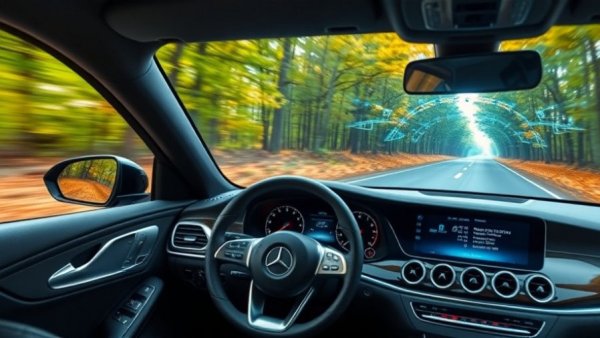
Revolutionizing the Driving Experience: Mercedes-Benz’s Holo Display
The automotive industry is on the brink of a technological revolution, and leading the way is Mercedes-Benz with its innovative Holo Display. This prototype windshield is unlike any we've seen before, aiming to transform how passengers interact with their vehicles while keeping safety in mind. Scheduled for further development, the Holo Display allows the front passenger to watch video content exclusive to their seat, while the driver remains distraction-free. This advancement illustrates Mercedes-Benz's commitment to pushing the boundaries of automotive technology in a way that benefits both comfort and safety.
How Does the Holo Display Work?
Mercedes’ Holo Display utilizes a sophisticated projector mounted in the dashboard that illuminates a special laminate film integrated into the windshield. This film is designed to reflect light at specific angles, allowing only the passenger to view the projected content. This means while a movie or navigation is playing on the passenger side, the driver sees nothing—an essential feature for maintaining focus on the road. Lund's head engineer Lena Hees describes the technology as employing “super-small mirrors” that enable clear visibility even in bright conditions. Such meticulous engineering is vital, particularly in a world where even minor distractions can have significant consequences.
The Balance of Safety and Innovation
With growing concern over driver distraction, the National Highway Traffic Safety Administration (NHTSA) has guidelines established since 2013 to prevent video content from being viewable by drivers. Mercedes-Benz is navigating these rules carefully, branding the Holo Display as a concept rather than a market-ready product. The company is mindful of these regulations, understanding that the development of technology must go hand-in-hand with the responsibility of ensuring safety on the road. There's evident cautious optimism about how such technology could enhance automotive experiences without compromising safety. The challenge is finding that balance between innovation and the potential for distraction, a challenge that will define the future of in-car technology.
Current Trends in Automotive Displays
The Holo Display aligns with broader trends in the automotive sector, where personalization and interactivity are progressively prioritized. Automation and consumer engagement through technology have taken center stage in vehicle design as manufacturers strive to differentiate themselves in a crowded market. Companies like Hyundai Mobis and ZEISS are also working on similar holographic systems, targeting mass production for 2029. With the ever-increasing emphasis on unique visual experiences, automakers are exploring various technologies that could redefine passenger interaction within vehicles. Innovations in display technology are not just about entertainment; they have the potential to enhance journey planning, sharing experiences, and providing real-time information about the surroundings.
Technological Milestones Leading to the Holo Display
The journey toward the Holo Display reflects decades of innovation in automotive technology, illustrating how past concepts are evolving into functional applications. Mercedes-Benz has been exploring holographic displays since filing for its first patent in 1997. Although its initial patent lapsed in 2012, the resurgence and advancement of this technology signal a shift in how we perceive car displays—not as mere tools, but as interactive platforms enhancing user experience. This long-term vision underscores Mercedes-Benz’s commitment to integrating cutting-edge technology into their vehicles, keeping them at the forefront of the automotive industry.
What This Means for Consumers
For potential car buyers and enthusiasts, understanding the implications of such innovations is crucial. This technology could soon allow passengers to engage with navigation systems, video calls, or entertainment without worrying about distracting the driver—essentially redefining travel for passengers in luxury vehicles. Additionally, these advancements may lead to increased consumer demand for in-car technology, prompting manufacturers to further integrate smart features within their cars. As automotive technology continues to integrate more seamlessly into everyday life, it's important for consumers to stay informed about what these advancements mean for safety and convenience. The prospect of more personalized, immersive experiences stands to enhance the appeal of new vehicles, making the market more competitive as a result.
Final Thoughts: Looking Ahead
As we witness the evolution of automotive displays, it is vital to engage in dialogue about these advancements and their effects on the driving experience. With major players like Mercedes-Benz leading the charge, it is an exciting time for both consumers and the automotive industry. The potential for innovation to reshape how we interact with our vehicles is immense, encouraging a visionary approach to future automobile design. Potential buyers should keep an eye on this technology and consider how it fits into their future automotive needs and desires. The prospect of safer, more personalized in-car experiences is on the horizon, and it could be a game-changer in how we view transportation.
Stay tuned to automotive news for further updates on the Holo Display and related technologies that may soon elevate your driving experience greatly. As the automotive landscape continues to evolve in response to consumer desires and technological possibilities, one can only imagine the exciting developments that lie ahead. As these innovative features become more prevalent, they promise to enhance not just convenience, but also the overall enjoyment of traveling, be it for short commutes or long road trips.






Write A Comment