


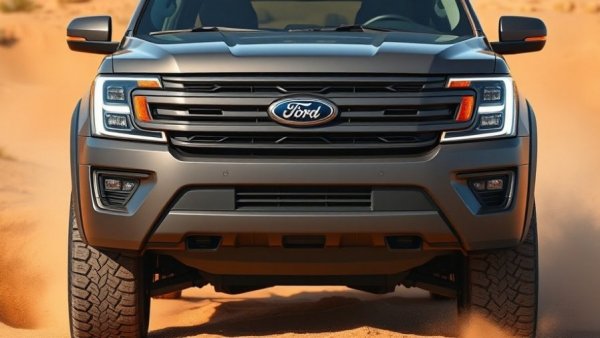
Ford’s Ambitious Project Overland Expedition
Ford has unveiled a remarkable one-off vehicle dubbed Project Overland, built in partnership with Fox Factory. This revolutionary Expedition Tremor overland rig demonstrates the peak of off-road capability, showcasing how Ford can merge factory precision with aftermarket customization for the adventurous vehicle enthusiast. It debuted just in time for the SEMA (Specialty Equipment Market Association) exhibition, where innovations in automotive design and upgrades are highlighted for general consumers and industry experts. The timing of this release also aligns perfectly with the growing trend towards off-road adventure vehicles, appealing to those who seek both luxury and ruggedness.
The Beginning: Why Start With the Tremor Trim?
When Ford engineers set out to create Project Overland, they made an astute decision to base the build on the Expedition Tremor trim. This variant is not just another SUV; it comes equipped with a rugged rear skid plate, Raptor-inspired running boards, and commits to a ground clearance of 10.6 inches. Enhanced with specialized terrain-response modes and all-terrain tires, the Tremor establishes an excellent foundation. Project Overland capitalizes on this robust base, marrying factory-grade capabilities with ambitious enhancements that push the limits for outdoor adventurers. This choice underscores Ford's commitment to producing vehicles that are not only stylish but also exceptionally functional right off the production line.
Significant Upgrades: What Does Fox Factory Do?
The highlight of Project Overland comes from its newly fitted suspension. Fox Factory installed 2.0 Performance Series coilovers, giving the Expedition an impressive 2-inch lift. This lift not only enhances ground clearance but also improves approach and departure angles, critical for navigating rocky trails and other rugged terrains. Adding to its prowess are the strikingly rugged wheels borrowed from the Ford F-150 Raptor R, which are wrapped in BFGoodrich All-Terrain T/A KO2 tires, designed to tackle diverse terrains. These features empower the Expedition to handle more challenging landscapes, supporting Ford's narrative of creating vehicles that perform exceptionally well in real-world conditions. Moreover, the vehicle’s upgraded front bumper integrates a robust skid plate and a Warn winch, ensuring that adventurers are well-equipped for any situation they might face while off the beaten path.
Tent Living: A Camp Ready Configuration
For camping enthusiasts, Project Overland incorporates a Yakima SkyRise HD rooftop tent and an OverNOut awning, providing a versatile camping solution directly from the factory. The rooftop tent is spacious and designed for quick setup, making it ideal for those who want to spend more time exploring the great outdoors rather than fussing over camping arrangements. With additional accessories like a ladder, side curtains, and recovery boards mounted on a large roof rack, the rig is not only designed for exploring but for enjoying life outdoors. Night-time visibility isn’t neglected either; new LED roof and ditch lights ensure that every adventure continues even after the sun sets, allowing for late-night bonfires or stargazing sessions.
A Signal for the Future: Blurring Factory and Aftermarket
Ford's Project Overland marks a pivotal moment that signals the increasing crossover between factory vehicles and custom builds. It demonstrates the firm’s willingness to blur the lines of direct consumer offerings and the desires of vehicle enthusiasts. Many components featured on this Expedition aren’t just showpieces; they can be sourced from Ford’s accessories catalog, reinforcing a message that Ford supports the aftermarket scene and recognizes the true needs of its customers. This approach may indicate a strategic shift where manufacturers not only build vehicles that can be customized but also actively participate in the aftermarket conversation.
The ability to purchase components like the Raptor R wheels, which retail around $2,730, directly from Ford encourages consumers to personalize their vehicles while maintaining warranty coverage. This is a significant step in the automotive industry, as it bridges the gap between factory production and consumer-driven customization.
What This Means for Future Vehicle Trends
As we look towards 2024, Project Overland sets a precedent for automotive manufacturers to follow. The increasing interest in vehicles that can double as adventure platforms will likely lead to more innovations in the SUV sector. With many consumers embracing outdoor adventures, the demand for rugged, multi-functional vehicles will grow. Ford's approach suggests that integration of aftermarket parts will become standard practice, encouraging a shift in how consumers perceive factory-integrated vehicles. As automakers recognize outdoor adventures as a prominent lifestyle choice, expect to see more models incorporating specialized gear that previously would have required extensive aftermarket investments.
Additionally, this trend may encourage competition among automakers to offer similar options, resulting in a broader market of vehicles that cater specifically to outdoor enthusiasts. This could lead to enhanced features, specialized accessories, and perhaps even partnerships with outdoor brands to further enhance vehicle capabilities.
Conclusion: What Lies Ahead for Ford Enthusiasts?
Project Overland is one of many waves within the automotive sea, signaling robust trends towards adventure-ready vehicles equipped by the manufacturer. As Ford effectively connects the factory mindset with off-road enthusiasts' dreams, the implications of such innovations will likely resonate throughout the automotive industry. For enthusiasts, this is a call to recognize that their next potential vehicle might already be in the making—aligning factory engineering with personal adventure. The success of Project Overland could encourage Ford to expand its range of customizable offerings, creating a new market segment that emphasizes the importance of off-road capability and adventure readiness. Overall, automotive consumers can look forward to a future where their dream vehicle may not only be more attainable but also built with adventure in mind, directly from the manufacturer.






Write A Comment